
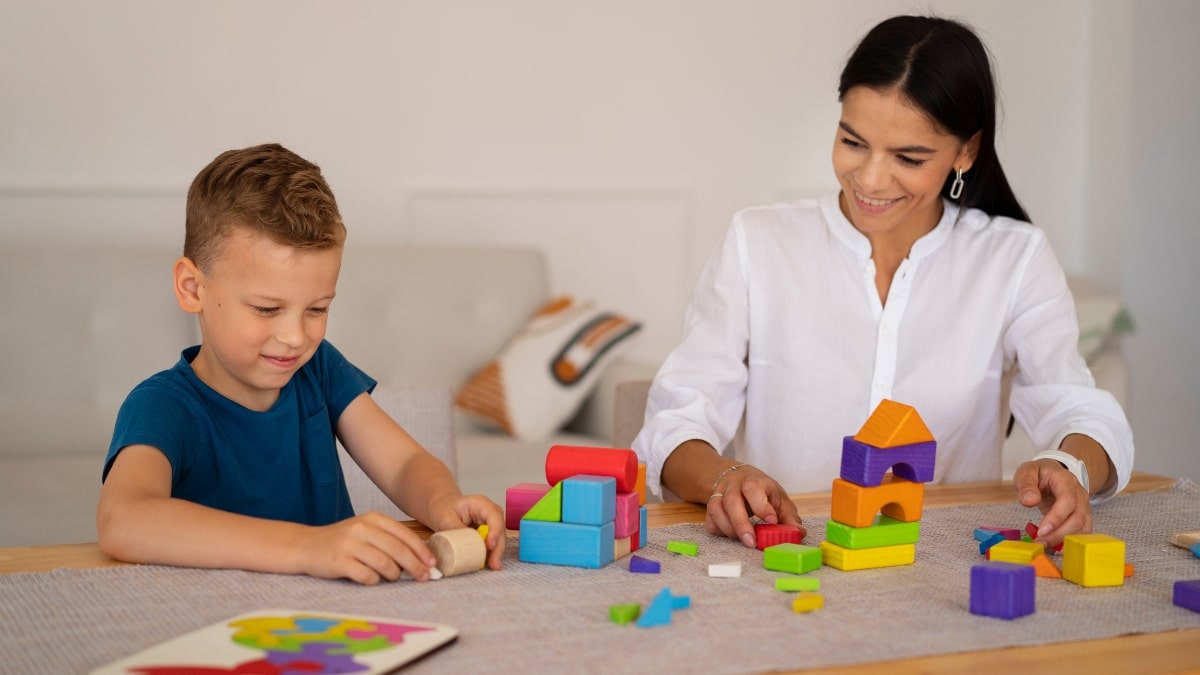

Applied Behaviour Analysis is a scientific method that helps the children with autism learn important life skills through simple and structured teaching. It focuses on understanding their behaviour and finding ways to support positive actions through rewards and regular practice.
This particular therapy helps autistic children who need help in communication, social interaction and everyday routines. It is a very well-known therapy because it is research-based and planned carefully for each child’s needs.
The parents also prefer this method because it teaches practical skills that support independent living. In this blog, we will understand how ABA therapy helps the children build daily living skills.
What Daily Living Skills Mean for Children
The daily living skills are the basic abilities that help a child manage routine activities without too much support. These skills include:
- Dressing up
- Brushing teeth twice a day
- Bathing daily
- Eating independently
- Organising school items
Every child with autism needs to learn these skills to feel confident and work smoothly in daily life. When children find these tasks difficult, they may feel dependent on others and may struggle in school or social environments. However, such children can gradually gain their independence and feel more capable in their lives with the right guidance and structured learning.
Why Daily Living Skills Matter in Childhood Development
These skills help the children with autism build confidence, self-reliance and a sense of responsibility. It strengthens their belief in their abilities and reduces frustration when they complete a task on their own.
The ABA therapists help the children with autism to learn these skills. It helps them to interact in a better way with their family, parents, therapists and classmates. The children who manage their routine well are able to adjust in the classroom and participate comfortably in the activities.
If an autistic child learns these activities early, it helps them to prepare for teenage responsibilities and a career. Therefore, these daily living skills are essential for their overall development.
How ABA Therapists Improve Daily Living Skills of Autistic Children
Now, we will thoroughly understand how the ABA therapists help an autistic child in improving their daily living skills.
- Basically, the therapists divide a the plan into smaller and easier steps for the children with autism so they can understand it easily.
- The therapist focuses on repeating each step that is practised many times until the child learns it confidently.
- When the child completes a step correctly, the therapists encourage them to continue learning which is basically known as positive reinforcement.
- The therapists also observe their behaviours carefully to understand what motivates the child to keep learning.
- After that, they prepare personalised plans that match the child’s learning style, comfort level and pace.
- As a result, the autistic children learn tasks more smoothly and begin performing them independently with time and consistent practice.
Key Daily Living Skills Taught Through ABA Therapy
In this therapy, the children with autism learns the following useful everyday skills that help them become more independent.
- Personal hygiene skills: The personal hygiene skills basically include brushing teeth twice every day, washing hands, combing hair and bathing regularly and safely with proper guidance.
- Feeding skills: These skills help the children with autism to learn how to hold utensils, sit properly at the table, chew food safely and follow simple eating manners.
- Dressing skills: This skill is taught by helping the children identify their clothes, use buttons, tie their shoelaces and choose the clothes that match the weather.
- Home responsibility skills: These skills teach them how to keep toys in place, keep the room neat and understand small household tasks.
Each skill is taught to them at a slow pace so that the child can learn them without stress and feel more confident over time.
What Techniques ABA Therapists Use for Skill Building
ABA therapists use simple and clear techniques to help the children learn everyday skills in a comfortable way. One common method is task analysis where the therapist breaks a big routine into many small steps that the child can understand easily. The child learns each step slowly and in an organised manner until they start to feel confident.
Prompting is another method where the therapist gently provides verbal or physical help when the child needs support. These prompts are reduced slowly when the child starts doing the steps on their own. Reinforcement is used throughout the learning process because children with autism learn better when they receive praise as rewards.
Some visual tools like picture charts and simple handwritten steps also help them follow their routines. The therapists make learning smoother and help the autistic children remember all these skills by using the above methods.
How Parents Support Daily Living Skills at Home
Parents of autistic children play a very important role in helping their children practice these everyday skills at home or anywhere outside the therapy sessions. When the parents follow the same steps and methods that are taught in therapy, children learn faster and show more steady progress in their behaviour.
Also, parents can create simple routines for morning, evening and mealtime activities to help children with autism stay organised. They can use picture charts like therapists, short instructions and gentle reminders to help the children complete their tasks correctly.
Moreover, praising autistic children regularly helps them feel more confident in their abilities. Their parents can also talk to the therapists to understand which skills need extra practice and how to support the child safely at home. The children with autism learn things faster when parents and therapists work together.
Long-Term Benefits of ABA Therapy for Daily Skills
Here we have discussed the long-term benefits of ABA therapy that can help the parents decide whether to opt for it:
- Children who learn these everyday skills through ABA therapy become more confident at the end of therapy and don’t rely on constant help from adults.
- Their communication skills improve because they understand instructions better and respond in a more organised way.
- Their social behaviour skills become stronger because they can join activities without fear or confusion.
- It helps many children become ready for school when they manage their things, follow simple rules and stay focused on their work.
As they grow older, these skills help them take care of themselves, stay organised and handle simple responsibilities at home or outside. Thus, ABA therapy creates a strong foundation that supports children with autism throughout their school life and even in adulthood.
Conclusion
ABA therapy helps children with autism learn necessary life skills in a structured and supportive way. It helps them build confidence and become more independent with time. It also helps them understand routines, follow steps and manage their day with more comfort.
At Curakids Autism Services, we provide personalised ABA therapies that guide children with autism gently and steadily. We help them learn skills that support their growth at home, in school and in their everyday life. The children can develop essential life skills that help them throughout their childhood and beyond with regular practice and personalised strategies.
